Written in Ink, Meant to Last: The Americans Who Still Trust Paper Over Servers
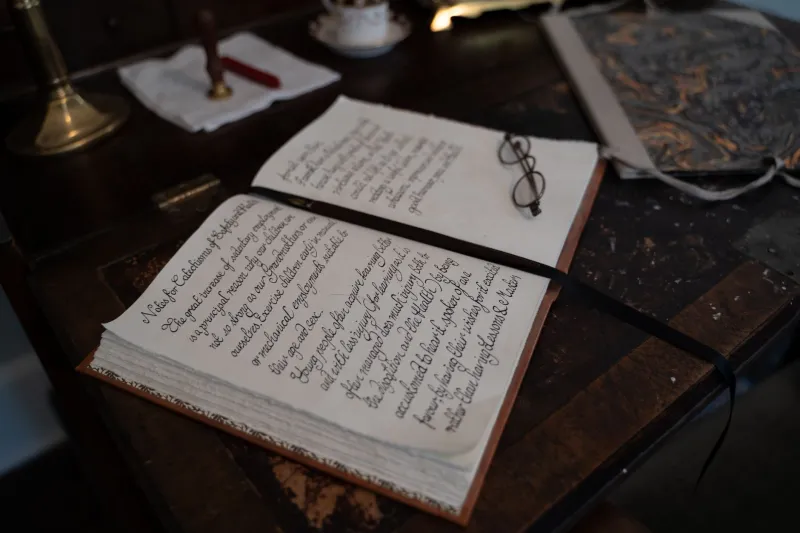
In a small pharmacy tucked along the main street of a town in rural Kentucky, a woman named Doris has been filling prescriptions for thirty-one years. Behind her counter, stacked in a wooden cabinet her father built in 1974, sit rows of composition notebooks — each one dated, each one dense with handwritten entries recording patient consultations, medication adjustments, and allergy warnings. A state inspector once asked her, not entirely without sympathy, when she planned to migrate the records to a certified digital platform. She told him she already had a certified platform. She pointed to the notebooks.
"If the power goes out, if the system crashes, if the company that hosts the software goes bankrupt or gets hacked," she said, "I can still tell you what Mrs. Calloway is allergic to."
Doris is not alone. Across the United States — in post offices that serve communities of fewer than three hundred people, in family hardware stores that have tracked inventory by hand since the Eisenhower administration, in county clerk offices where certain officials insist on parallel paper documentation — a persistent and often deliberate refusal to go fully digital continues to shape how some Americans conduct their most essential transactions. These individuals are not technophobes. Many use smartphones, maintain email accounts, and appreciate the conveniences that digital infrastructure affords. What they resist is total dependency.
The Argument From Fragility
The case these record-keepers make is not primarily sentimental. It is structural. Digital systems fail. Ransomware attacks on American hospitals, municipal governments, and school districts have demonstrated repeatedly that institutions which store everything in electronic form can be rendered functionally blind within hours. The 2021 ransomware attack on the Colonial Pipeline, which disrupted fuel distribution across the southeastern United States, offered the broader public a brief and unsettling glimpse of what total dependence on networked infrastructure can mean when that infrastructure is compromised.
For the people who maintain paper ledgers alongside — or instead of — digital records, this fragility is not theoretical. It is the central premise of their professional philosophy.
A postmaster in a small Oregon community, who has served the same rural route for over two decades, keeps a handwritten log of every package requiring a signature. The postal service's official scanning system is mandatory, she acknowledges, and she complies with it. But she also writes down the name, the date, and the item. "Scanners go down," she says flatly. "Paper doesn't need a Wi-Fi signal."
What the Ledger Remembers
Beyond resilience, the people who maintain analog records frequently speak about something harder to quantify: the texture of accountability that handwriting imposes. When a pharmacist writes a note by hand, the act of writing slows cognition in ways that clicking a dropdown menu does not. The physical effort of inscription — choosing words, forming letters, committing ink to paper — creates a kind of deliberate attention that proponents argue digital entry systems systematically erode.
Researchers in cognitive science have documented this phenomenon in educational settings, finding that students who take handwritten notes demonstrate stronger long-term retention than those who type. Whether the same dynamic applies to professional record-keeping is a question that has received far less formal study, but the practitioners themselves speak about it with considerable confidence.
A third-generation hardware store owner in rural Alabama describes the process of hand-tallying his weekly inventory as something akin to a conversation with the business itself. "When I write it down, I notice things," he says. "I notice that we've sold twelve of one kind of bolt and none of another. The computer would tell me that too, but I wouldn't be paying the same kind of attention."
This sensory engagement with information — the tactile relationship between a person and the record they are creating — is, these practitioners argue, not merely nostalgic preference. It is a form of knowledge transmission that purely digital systems cannot replicate.
Pressure From Every Direction
The pressures these holdouts face are considerable and multiplying. Federal and state regulations increasingly mandate electronic record-keeping in healthcare, finance, and public administration. Software vendors market their platforms with the language of inevitability, framing digitization not as a choice but as a professional obligation. Insurance companies offer discounts for businesses that adopt approved digital systems. And the workforce itself is changing: younger employees, trained almost entirely in digital environments, sometimes regard paper records as a liability rather than a safeguard.
For small institutions operating on thin margins, the cost of maintaining dual systems — analog and digital simultaneously — can be genuinely prohibitive. The family pharmacy in Kentucky, for example, spends money on archival-quality composition books, fireproof filing cabinets, and the labor hours required to maintain two sets of records. That expenditure is a choice, and it is one that becomes harder to justify to accountants and regulators with each passing year.
Yet the people making that choice rarely describe it as a burden. They describe it as a responsibility.
The Question of Who Controls the Record
Underlying the practical arguments is a more philosophical concern about ownership and control. When records exist on paper, in a cabinet, in a building, they belong — in a meaningful and immediate sense — to the institution that created them. When records migrate to a cloud-based platform operated by a third-party vendor, the question of ownership becomes contractual, subject to terms of service that can be revised, to companies that can be acquired or dissolved, and to data architectures that can be altered without the user's knowledge or consent.
This concern is not abstract in communities that have watched local banks absorbed by national chains, local newspapers shuttered, and local institutions of every kind hollowed out by consolidation. The people who maintain paper records often articulate their resistance in terms of sovereignty — the right of a small institution to know exactly where its information lives and who has access to it.
"My records are in that cabinet," the Kentucky pharmacist says. "I know where they are. I know who has touched them. No one can update them remotely. No one can delete them without walking into this building."
Preservation as a Form of Civic Practice
What connects these scattered practitioners — the rural postmaster, the hardware store owner, the independent pharmacist — is not a shared ideology or an organized movement. It is a common intuition that certain forms of knowledge and accountability are worth the inconvenience of preservation. In an era when the pace of technological change has outrun most institutions' capacity to evaluate its consequences, their insistence on paper is, in its own way, a form of editorial judgment: a decision about what matters enough to protect.
Blink Media has spent considerable time documenting the people and institutions that labor to keep analog knowledge alive in a digital world. What continues to emerge from those conversations is a consistent and sobering observation: the things most worth preserving are rarely the things that digital systems are designed to prioritize. Speed, scalability, and searchability are the values that software optimizes for. Durability, accountability, and human legibility are the values that a well-kept ledger, written in ink and stored in a fireproof cabinet, quietly insists upon.
The notebooks in that Kentucky cabinet are not romantic artifacts. They are, in the most practical sense, a form of institutional memory that no server outage can erase. Whether the systems being built to replace them are as reliable, as transparent, or as enduring is a question that deserves far more serious public examination than it has yet received.