Voices on the Verge: The Oral Historians Refusing to Let America's Untold Stories Vanish
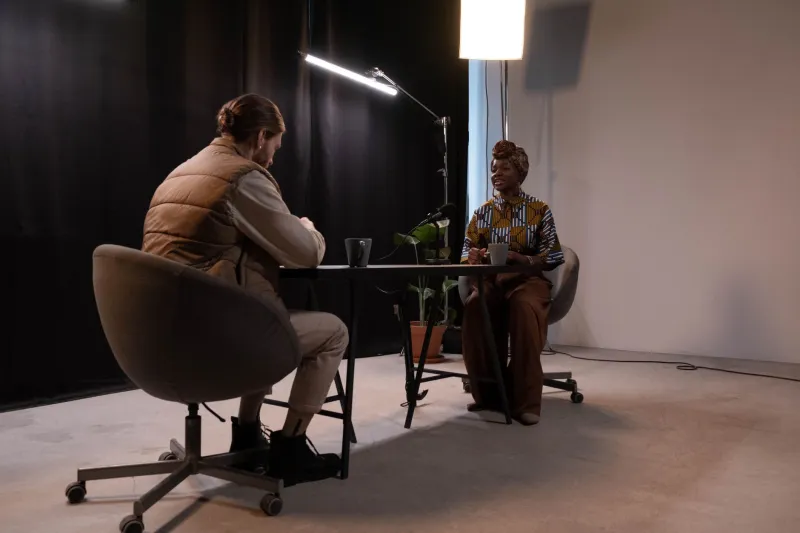
Somewhere in a church basement in Chicago's Pilsen neighborhood, a woman named Esperanza Reyes sits across a folding table from a graduate student holding a portable digital recorder. Reyes is eighty-one years old. She came to the United States from Oaxaca in 1974, worked for four decades in garment factories, survived a union-busting campaign that cost her coworkers their jobs, and raised three children in a city that barely registered her existence in any official record. Today, for the first time in her life, someone is asking her to tell her story — all of it, from the beginning, without interruption.
The session will last nearly four hours.
This is what oral history looks like in practice: unhurried, intimate, and profoundly resistant to the rhythms of contemporary media. It is also, by almost every institutional measure, a discipline in crisis.
The Architecture of Disappearing Memory
Oral history as a formal practice in the United States dates to the mid-twentieth century, when Columbia University established its oral history program in 1948 under the conviction that recorded personal testimony could illuminate what written archives routinely omitted. The methodology spread slowly through academic institutions, public libraries, and community organizations, gaining particular urgency during the civil rights era, when activists recognized that the movement's most essential truths were being carried in the memories of people who had never been invited to write them down.
Decades later, the field faces a paradox that its founders could not have anticipated. The technology required to capture and store oral testimony has never been more affordable or accessible. And yet the cultural infrastructure — the patience, the funding, the institutional commitment to deep listening — has rarely been more fragile.
"We have better microphones than we've ever had," says Dr. Miriam Okafor, a historian and community archivist based in Detroit who has spent the past fifteen years documenting the oral histories of West African immigrant communities in the Midwest. "What we don't have is time, money, or an audience that's been trained to sit still long enough to receive what these people are offering."
Okafor's observation points to something larger than a funding shortfall. It describes a civilizational shift in how Americans relate to narrative itself.
Speed as Ideology
The platforms that now dominate American cultural life — social media feeds, short-form video applications, algorithmically curated news aggregators — are not neutral delivery mechanisms. They are architectures built on a specific theory of attention: that shorter is better, that faster is more valuable, and that content which cannot be consumed in under two minutes is, by definition, content that has failed.
Oral history operates according to an entirely different logic. A single recorded interview with a labor organizer who participated in the 1968 Memphis sanitation workers' strike might run six hours. A collection of testimonies from Vietnamese refugees who resettled in Louisiana after 1975 might fill hundreds of cassette tapes before a researcher can begin to understand the patterns within them. The work is slow by design, because the stories themselves are slow — textured with contradiction, digression, silence, and the kind of meaning that only emerges when a speaker is allowed to circle back and revise.
None of this translates easily to a digital ecosystem optimized for engagement metrics.
"There's a version of oral history that survives in the current environment," says James Whitfield, director of a community documentation project in rural Appalachia that has recorded over two thousand interviews with coal miners, their widows, and their children. "It's the two-minute clip version. The soundbite. And that's not nothing — it's better than silence. But it's not the whole person. It's not the whole story."
The Technical Crisis Behind the Cultural One
Beyond the question of attention lies a more immediate and material problem: the physical deterioration of existing recordings.
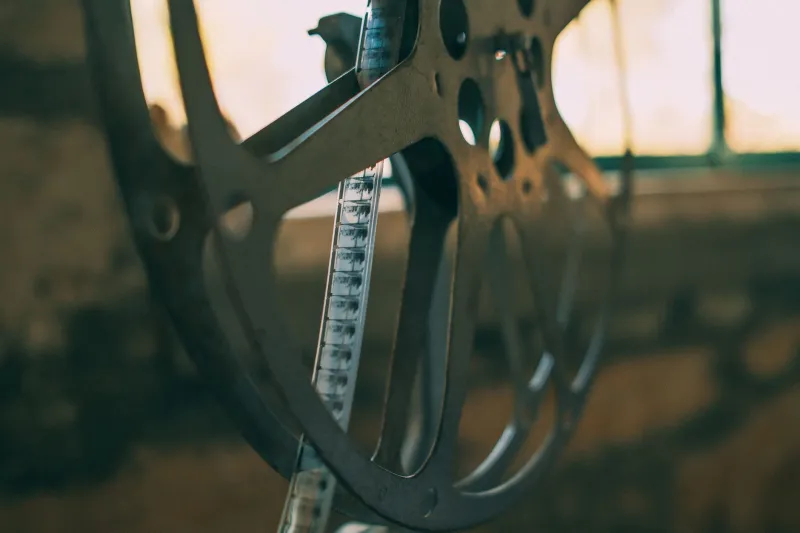
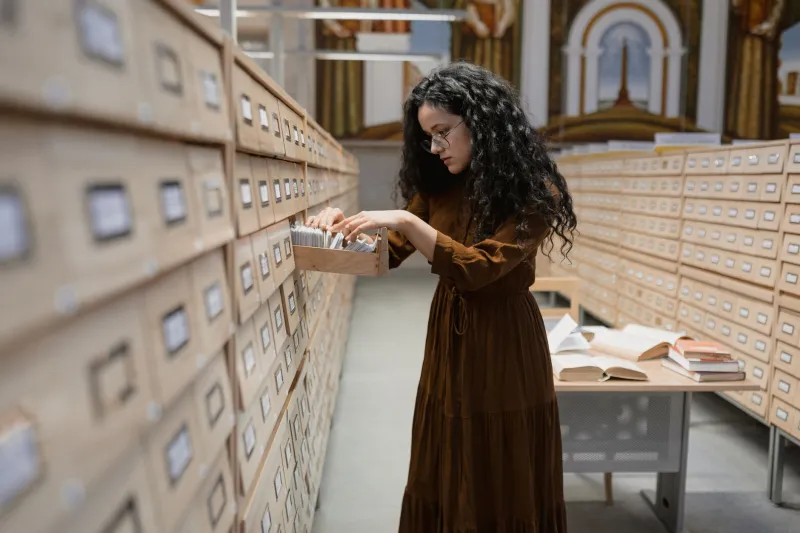
Oral history collections across the United States contain thousands of hours of testimony captured on formats that are rapidly becoming unplayable — reel-to-reel magnetic tape, cassettes, Betamax, early digital DAT recordings. Many of these materials are stored in conditions that accelerate their decay: underfunded public libraries without climate control, church basements prone to flooding, university archives with digitization backlogs measured in decades.
The Oral History Association estimates that a significant portion of the analog recordings held by community organizations nationwide have never been digitized and may not survive long enough to be. The financial cost of professional digitization — when done properly, with adequate quality control and metadata documentation — can run to hundreds of dollars per hour of audio. For a small nonprofit sitting on five hundred hours of irreplaceable testimony, that arithmetic is prohibitive.
"We have recordings from the 1970s of farmworkers describing conditions that no one documented anywhere else," says Rosa Medina, who coordinates archival work for a labor history organization in California's Central Valley. "The tapes are deteriorating. We know they're deteriorating. And we don't have the money to save them at the rate they're being lost."
Some organizations have turned to grants from the National Endowment for the Humanities and the Institute of Museum and Library Services, both of which fund preservation work. But federal arts and humanities funding has faced sustained political pressure for years, and the organizations that most need support — small, community-based, often led by people of color — are frequently least equipped to navigate the grant application process.
What Is Lost When Listening Ends
The stakes of this crisis extend beyond archival completeness. Oral testimony preserves not only facts but epistemologies — ways of knowing, organizing experience, and transmitting values that written records cannot replicate.
When an elder from a Puerto Rican community in New York describes surviving Hurricane Maria and her account goes unrecorded, what disappears is not merely a data point about storm damage. What disappears is a specific understanding of government abandonment, of community resilience, of the relationship between a territory and the nation that claims it — an understanding rooted in embodied experience that no policy document or news report can fully convey.
This is what oral historians mean when they speak of irreversibility. Unlike a crumbling building, which can at least be photographed before demolition, a human memory cannot be recovered once the person carrying it is gone.
"Every week we don't record is a week we can't get back," says Okafor. "And every person we don't reach in time is a library that burns."
The People Doing the Work
Despite the obstacles, the field is not without its practitioners, and some of the most vital work is happening outside of academia entirely.
In New Orleans, a collective of documentary filmmakers and community educators has spent the past decade recording testimonies from Black residents displaced by Hurricane Katrina, building an archive that explicitly centers narratives the mainstream media cycle had no patience to pursue. In Minneapolis, a Somali community organization has trained young volunteers to interview elders in Somali, creating bilingual oral history collections that serve both preservation and intergenerational connection. In rural Georgia, a retired schoolteacher named Harold Simmons has spent his weekends for the past twelve years interviewing descendants of enslaved people, producing a regional archive that local historians describe as singular in its depth.
These projects share a common profile: driven by personal commitment, operating on inadequate resources, and largely invisible to the national conversation about cultural preservation.
"Nobody's writing about us," Simmons says, with a laugh that contains something more complicated than amusement. "Which is fine. We're not doing it for the coverage. We're doing it because somebody has to."
A Practice That Demands More of Us
There is something quietly radical about oral history's insistence on slowness in an era that treats speed as a moral virtue. To sit with another person for four hours and listen — truly listen, without an agenda, without a word count, without a publish deadline — is to perform an act of attention that contemporary culture has made structurally difficult.
It is also, oral historians would argue, among the most democratic acts available to us. It requires no specialized equipment beyond a recorder and a willingness to be present. It produces knowledge that belongs to the community it documents. And it insists, against the grain of an information economy that privileges the indexed and the searchable, that some of the most important things human beings know cannot be retrieved by algorithm.
Esperanza Reyes finished her interview as the afternoon light shifted in the church basement. The graduate student thanked her. Reyes nodded, then asked, quietly, whether anyone would actually listen to what she had said.
It was the right question. And the honest answer is that the systems we have built make it harder every year to say yes.