Connected by a Human Voice: The Telephone Operators Who Wired America Together
There is a particular kind of knowledge that cannot be stored in a server. It lives in the hands, in the ear, in the accumulated instinct of someone who has spent decades learning to read the texture of a human voice. For the last generation of long-distance telephone operators — those men and women who manually connected calls across state lines, time zones, and the wide silences of rural America — that knowledge was their entire profession. And for most of the country, it has already vanished without ceremony.
At its peak, the American telephone operator workforce numbered in the hundreds of thousands. By the early 2000s, automation had reduced that figure to a fraction of its former scale. Today, the operators who remain work in highly specialized contexts: relay services for the deaf and hard of hearing, directory assistance holdouts, and a shrinking cluster of legacy systems still threading calls through human hands. The rest have retired, retrained, or simply aged out of a profession the telecommunications industry quietly decided it no longer needed.
What the industry did not account for — what it perhaps never considered — was the depth of what those workers actually did.
The Architecture Behind the Voice
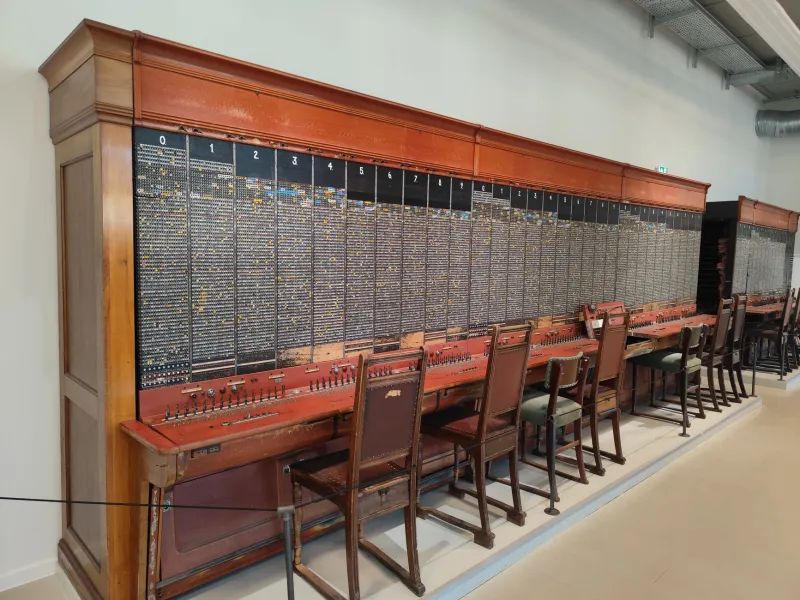
To understand the labor of a long-distance operator is to understand something fundamental about the infrastructure of American life before the internet rewired everything. These were not passive conduits. They were problem-solvers, crisis managers, and, in countless cases, the only human being standing between a caller and complete helplessness.
Operators memorized exchange codes the way musicians memorize scales — not consciously, but through sheer repetition until the knowledge became reflex. They learned to identify regular callers by the cadence of their dialing, by the particular way someone said "operator" when they picked up. They tracked time zones instinctively, routing calls with a geographic fluency that no GPS application has ever quite replicated.
In rural communities especially, the operator was often the most reliably available human voice in an emergency. Before 911 became universal, before mobile phones made every pocket a communications hub, the operator was the first call. They talked people through medical crises. They contacted law enforcement when a caller could not. They stayed on the line.
"You knew when something was wrong," recalled one retired operator who worked for a regional Bell subsidiary in the Midwest for nearly thirty years. "You could hear it in the first two seconds. And you didn't transfer the call and move on. You stayed."
That instinct — that refusal to simply move on — was not trained into operators through any formal curriculum. It was a professional ethic passed laterally, from senior workers to newer ones, through the culture of the switchboard floor itself.
The Relationships No Algorithm Inherits
One of the more quietly devastating aspects of the transition to automated systems is what happened to the relationships long-distance operators built with their regular callers. In an era when long-distance calls were expensive and significant, people placed them deliberately. They called on birthdays, on anniversaries, in moments of grief. And they often spoke to the same operators repeatedly.
Operators were not supposed to engage in extended personal conversation — company policy was generally clear on that point. But in practice, the boundaries were more porous. A caller who rang through the same exchange every Sunday afternoon to speak to an elderly parent became, over years, a familiar presence. Operators learned names. They noticed absences. They occasionally, quietly, asked if everything was all right.
This was not sentimentality. It was a form of social infrastructure that the telecommunications industry never bothered to measure because it never appeared on a balance sheet. The care embedded in that labor — the attentiveness, the continuity, the human recognition — was treated as incidental to the job. In retrospect, it may have been the job's most significant product.
"People don't realize how lonely long-distance used to feel," said a former operator who worked a night shift at a major carrier's regional hub through the 1990s. "You were the bridge. You were the person who made the connection real before the other person even picked up."
Crisis on the Line
The operators who managed communications during national emergencies occupy a chapter of American history that has never been adequately written. During the aftermath of major disasters — floods, fires, the tremors of political upheaval — long-distance operators worked extended shifts to manage catastrophic call volumes, prioritizing emergency traffic, manually rerouting around damaged infrastructure, and maintaining the coherence of a communications network under conditions that would have broken automated systems entirely.
The 1965 Northeast blackout. The floods that periodically severed rural exchanges. The surge of calls following major assassinations and national tragedies. In each instance, it was human judgment — the operator's trained capacity to triage, reroute, and hold — that kept the lines functioning.
This history is not taught. It is not commemorated. The operators who lived it are aging out of the possibility of being interviewed, and the institutions that employed them have largely moved on to concerns that have nothing to do with institutional memory.
What Automation Cannot Replace
The argument for automated telephone systems is not without merit. Automation reduced costs, expanded capacity, and made certain kinds of access more democratically available. There is no serious case for returning to a world of manual switchboards as a matter of policy.
But the displacement of human operators was never presented to the public as a tradeoff. It was presented as pure progress — as the natural and inevitable supersession of an outmoded system by a superior one. The losses were not itemized. The workers were not consulted. The relationships were not considered assets worth preserving in any form.
What we lost was not merely a job category. We lost a specific texture of human connection — one that was embedded in the daily infrastructure of American communication and that shaped, in ways both large and small, how people experienced the act of reaching out to one another across distance.
We also lost the workers themselves, or rather, we lost their stories. The institutional knowledge of long-distance operators — their understanding of how the network actually functioned at the human level, their memory of the calls that mattered — has no formal repository. It is dispersed among retired workers living quietly in communities across the country, held in memories that grow less accessible with every passing year.
Listening Before the Line Goes Dead
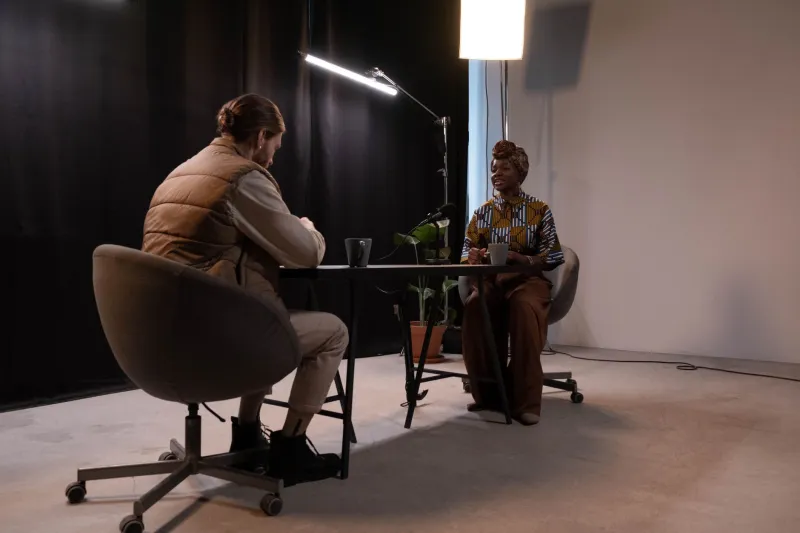
A handful of oral historians and documentary filmmakers have begun the work of recording what remains. The project is urgent and underfunded, as such projects almost always are. The operators who are still willing and able to speak are not young. The window is narrowing.
What these recordings reveal, consistently, is not bitterness — though some operators carry a justified sense of having been discarded without acknowledgment. What they reveal, more often, is pride. A profound and specific pride in work that required skill, demanded judgment, and made a genuine difference in people's lives on the days that mattered most.
That pride deserves a more permanent home than the fading memories of the people who earned it. The history of American communication infrastructure is, in no small part, the history of the workers who built it with their voices and their hands and their willingness to stay on the line. It is a history worth preserving before the last connection drops.