Guardians of the Unindexed: The Librarians Fighting to Keep Local History Alive in a World Built for Clicks

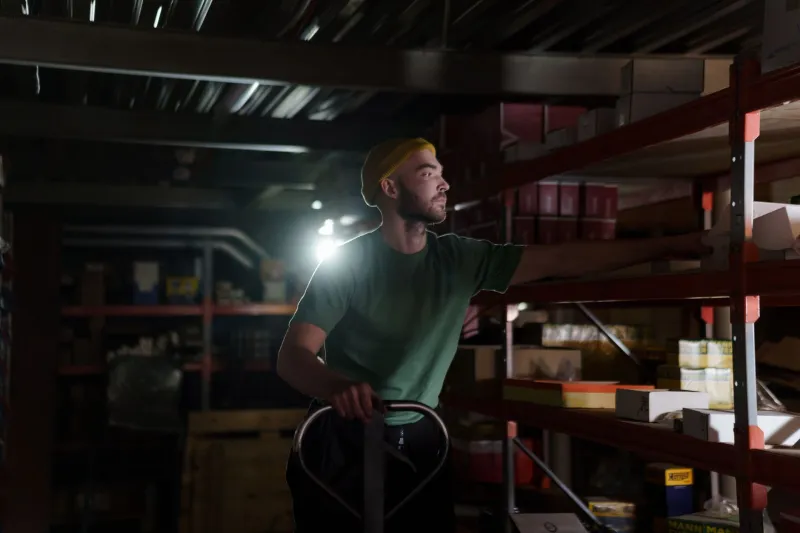
Photo by Photo by Jaipreet Singh on Unsplash on Unsplash
On a Tuesday morning in Fayetteville, Arkansas, a retired librarian named Dorthea Simms sits in a climate-controlled room surrounded by acid-free folders and aging cassette tapes. She is transferring a 1987 interview — conducted by a local high school student as part of a now-defunct community project — onto a digital archive server that will never appear in a Google search result. The interview features an elderly Black farmer describing the systematic exclusion of his family from federal crop insurance programs in the 1950s. It is, by any measure, a document of profound historical significance. It is also, by the logic of the modern internet, effectively invisible.
"If we don't hold it," Simms says, pausing to adjust a fraying label, "no one will."
Her conviction is not rhetorical. It is operational. And it is shared by a growing network of librarians, archivists, and community memory workers who have come to understand that the internet's promise of universal access was always conditional — shaped by what generates engagement, what attracts advertising, and what fits neatly into the metadata frameworks built by corporations whose primary obligation is to shareholders, not to history.
The Algorithmic Blind Spot
The dominant logic of the modern web is optimization. Platforms surface content that holds attention, drives interaction, and returns users to the feed. In this environment, a digitized collection of handwritten meeting minutes from a 1960s tenant farmers' union in rural Mississippi competes — poorly — against viral video and celebrity news. It is not that such records are actively suppressed; it is that the architecture of discovery was never designed with them in mind.
This structural indifference has real consequences. Researchers at the Digital Preservation Coalition have documented accelerating rates of link rot and content decay across the open web, with studies suggesting that a significant portion of web pages from even a decade ago are no longer accessible in their original form. For hyperlocal content — community newsletters, small-town newspaper archives, neighborhood association records — the attrition rate is even steeper. These materials were often digitized once, uploaded to platforms that no longer exist, and never redundantly preserved.
Librarians have a term for what remains: the dark archive. It refers to collections that exist but are not publicly accessible, often because the institutions holding them lack the staffing or funding to make them discoverable. The irony is considerable. In an era of ostensibly infinite digital storage, more local history may be effectively inaccessible today than at any previous point in the modern era.
The Oral History Imperative
For many community archivists, the most urgent preservation challenge is not paper but voice. Oral history — the systematic recording of personal testimony, community memory, and lived experience — has long served as a corrective to the omissions of official documentation. It is how the experiences of migrant farmworkers, Indigenous communities, LGBTQ+ elders, and working-class families enter the historical record at all. And it is among the most fragile categories of cultural artifact.
In Detroit, the Reuther Library at Wayne State University has been conducting oral history interviews with former autoworkers since the 1960s. The collection now numbers in the thousands of hours. But librarians there are candid about the challenge of making those recordings discoverable in an environment where search algorithms reward recency and engagement over depth and specificity. "We're not competing with Wikipedia," says one archivist who asked not to be identified by name. "We're competing with the assumption that if something isn't on the first page of results, it doesn't exist."
That assumption — quiet, pervasive, and increasingly consequential — is what motivates a generation of digital archivists who are building alternative infrastructure. Projects like the Internet Archive's regional partnerships, the Documenting the Now initiative focused on social media preservation, and dozens of state-level digitization consortia are attempting to create redundant, publicly accessible repositories for exactly the kind of content that corporate platforms have no incentive to prioritize.
Funding the Unglamorous Work
The challenge, as with most things in the nonprofit and public sector, is money. Library budgets across the country have faced sustained pressure for decades. The American Library Association has documented real-dollar declines in per-capita public library funding in numerous states since the 2008 financial crisis, with only partial recovery in the years since. Meanwhile, the technical demands of digital preservation — server maintenance, format migration, metadata standardization, rights clearance — have grown substantially more complex.
Federal programs through the Institute of Museum and Library Services have provided some relief, as have private foundations with an interest in cultural preservation. But the funding landscape remains fragmented and competitive, often requiring librarians to spend considerable time writing grants rather than doing the archival work those grants are meant to support.
There is also the question of what gets preserved and who decides. Community archivists have become increasingly attentive to the politics of selection — recognizing that the act of preservation is never neutral. Which oral histories get recorded, which newspapers get digitized, which community organizations have their records retained: these choices encode assumptions about whose past is worth keeping. The most thoughtful practitioners in the field are working to build collection policies that actively counteract historical patterns of exclusion, partnering with communities rather than simply collecting from them.
The Counterweight to Forgetting
What makes the work of these institutions genuinely radical — in the most precise sense of that word — is not any particular political orientation but rather their fundamental commitment to the proposition that memory is a public good. In a media environment increasingly structured around what is profitable to remember, that commitment is neither obvious nor easy to sustain.
The stories that librarians and archivists are fighting to preserve are not, for the most part, dramatic. They are the minutes of a school board meeting where a community voted to desegregate, decades before that decision appeared in any textbook. They are the letters of a Korean War veteran from rural Appalachia, written to a wife who saved every one. They are the photographs from a neighborhood that no longer exists, held by a family that moved away and donated them to the only institution they trusted to keep them.
These are the documents that do not trend. They will never generate the kind of engagement that sustains a platform's advertising revenue. But they are, in the most durable sense, what a society looks like when it refuses to let the market determine what is worth remembering.
Dorthea Simms finishes the transfer and labels the file with careful precision — date, subject, collection number, format. She moves to the next cassette. Outside, the algorithm continues its relentless sorting. Inside, the record grows by one more voice.