After Midnight, Before Dawn: The Invisible Workforce Keeping America Running
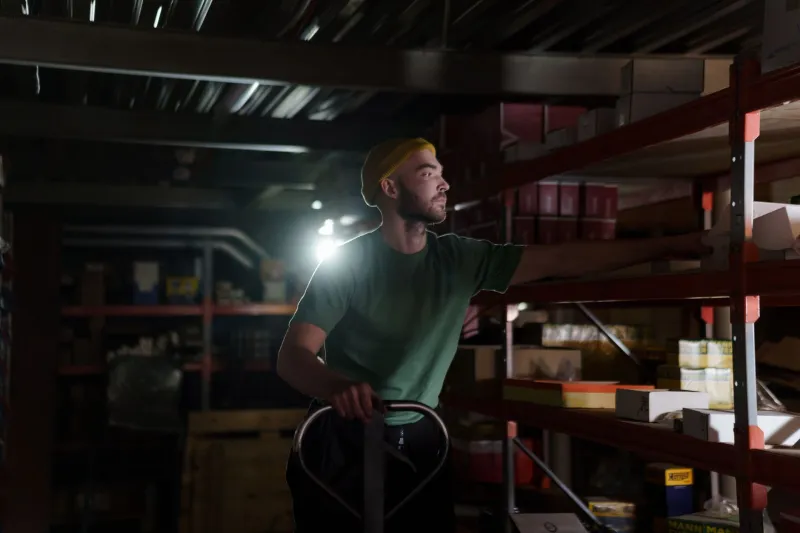
At 2:47 in the morning, the fluorescent lights inside a distribution warehouse on the outskirts of Memphis burn as bright as noon. Conveyor belts hum. Forklifts trace their familiar circuits. Somewhere near the loading dock, a woman named Darlene — who has worked the overnight shift for eleven years and asked that her last name not be used — takes a six-minute break and eats a granola bar alone in a break room designed for forty people.
"Most folks wake up and their packages are just there," she says. "They don't think about who put them there."
That invisibility is not incidental. It is, in many ways, the defining condition of overnight labor in the United States — a workforce numbering in the tens of millions that sustains the infrastructure of modern American life while remaining largely absent from public conversation, policy deliberation, and cultural recognition.
The Scale of the Unseen
According to the Bureau of Labor Statistics, roughly 15 million Americans work non-traditional hours, with a significant portion logging shifts between 10 p.m. and 6 a.m. They staff the emergency rooms that never close, guard the office towers that empty at five, assemble the components that arrive on assembly lines before sunrise, and clean the hotels and restaurants that will greet daytime customers in pristine condition. Their labor is not peripheral — it is load-bearing.
Yet the structures built to support workers — union contracts, regulatory oversight, workplace wellness programs, even the informal social networks that sustain professional communities — have been designed, almost entirely, around the rhythms of the standard workday. The overnight worker exists in a kind of institutional gap: present enough to be exploited, absent enough to be ignored.
"There is a persistent mythology in this country that the night shift is a temporary condition," says Dr. Adrienne Holloway, an occupational health researcher at the University of Illinois Chicago who has spent more than a decade studying non-traditional work schedules. "The data tells a very different story. For millions of Americans, particularly those in lower-wage industries, the overnight shift is not a stepping stone. It is the destination."
A Body Out of Time
The health consequences of sustained overnight work are well-documented and deeply troubling. Circadian disruption — the physiological stress caused by working against the body's natural sleep-wake cycle — is associated with elevated risks of cardiovascular disease, metabolic disorders, depression, and certain cancers. The World Health Organization classified overnight shift work as a probable carcinogen in 2007. That classification has done little to reshape American labor policy.
For healthcare workers, the irony is particularly acute. Nurses and nursing assistants, who constitute one of the largest groups of overnight workers in the country, are tasked with preserving patient health while absorbing disproportionate health risks themselves. A 2022 study published in the Journal of Occupational and Environmental Medicine found that nurses working rotating or permanent night shifts reported significantly higher rates of burnout, sleep disorders, and depressive symptoms than their daytime counterparts — findings that have intensified since the COVID-19 pandemic strained hospital staffing to its limits.
Rosario Medina, a registered nurse at a public hospital in San Antonio, describes the cumulative toll with a quiet precision. "By the end of a stretch of nights, you don't feel like yourself," she says. "You're functional, but you're not present. And the hardest part is that no one outside of this work really understands what that means."
The Wage Premium That Isn't
Conventional economic logic holds that overnight workers receive a compensatory wage premium — a financial acknowledgment of the antisocial hours and physical demands involved. In practice, that premium has eroded significantly across many industries over the past two decades.
A 2023 analysis by the Economic Policy Institute found that shift differentials — the additional pay per hour offered for overnight work — have declined in real terms in sectors including retail, food processing, and warehousing. In some cases, the differential has been eliminated entirely, absorbed into flat hourly rates that obscure the actual cost of non-daytime labor. Meanwhile, workers in these sectors are less likely to receive employer-sponsored health insurance, less likely to have access to paid sick leave, and more likely to face unpredictable scheduling that compounds the difficulty of managing health, childcare, and basic household logistics.
"The overnight shift was never glamorous," says Marcus Webb, an organizer with a labor advocacy coalition in Detroit who works with factory workers on the city's east side. "But there used to be an understanding — you give up your nights, you get something back. That understanding has been systematically dismantled."
Social Erasure and Its Costs
Beyond wages and health, overnight workers describe a subtler but no less significant form of deprivation: the erosion of social connection. School events, community meetings, religious services, medical appointments, and the ordinary rhythms of family life are structured around daytime availability. For workers whose schedules invert those rhythms, participation in civic and social life becomes a logistical challenge that compounds over time into something closer to isolation.
This isolation carries psychological weight. Research on shift workers consistently identifies loneliness and social disconnection as significant contributors to mental health challenges in this population. And yet, as with so many dimensions of overnight labor, the issue rarely surfaces in public health campaigns or policy conversations that tend to focus on more visible determinants of well-being.
"You become a ghost in your own community," says James Tran, a security officer in Houston who works overnight at a commercial office complex. "People see you when they need you, and then you disappear."
Organizing in the Dark
There are, however, signs of a shift — modest, uneven, but real. In several American cities, worker centers and labor organizations have begun developing resources specifically tailored to overnight workers: legal clinics held in the early morning hours, peer support networks accessible via text and app, and advocacy campaigns that center the specific conditions of non-daytime labor.
In Chicago, a coalition of overnight healthcare workers successfully negotiated enhanced shift differentials and mandatory rest provisions in a 2023 contract agreement — a victory that organizers describe as the product of years of relationship-building conducted largely outside the view of mainstream labor coverage. In California, legislation expanding heat and air quality protections to include overnight warehouse workers passed in 2022 after sustained pressure from worker advocacy groups.
These are incremental gains in the face of structural challenges that run deep. But they reflect something important: overnight workers are not passive recipients of the conditions imposed upon them. They are, increasingly, articulating a collective demand for visibility — for policies, protections, and a public recognition that acknowledges the true cost of the labor that keeps America functioning through the darkest hours.
What Recognition Requires
Darlene, finishing her granola bar in the Memphis warehouse, doesn't use the language of labor organizing. She speaks in more immediate terms — about wanting her employer to fix the broken vending machine in the break room, about wishing the safety officer would do his rounds after midnight instead of only during the day shift, about hoping her daughter understands, someday, why she was always asleep when the school bus came.
These are not abstract demands. They are the texture of a life shaped by the needs of an economy that has never fully reckoned with the human cost of its own insistence on running without pause.
Recognizing overnight workers — genuinely, structurally, not merely rhetorically — requires more than a moment of appreciation. It requires wages that reflect the actual sacrifice involved, health protections calibrated to the specific risks of circadian disruption, and a policy imagination capacious enough to include the millions of Americans who do their most important work while the rest of the country sleeps.
Until then, the lights in the warehouse will keep burning. And Darlene will keep showing up.