The Men and Women Reading the Rails: How Analog Dispatchers Still Hold America's Freight Network Together
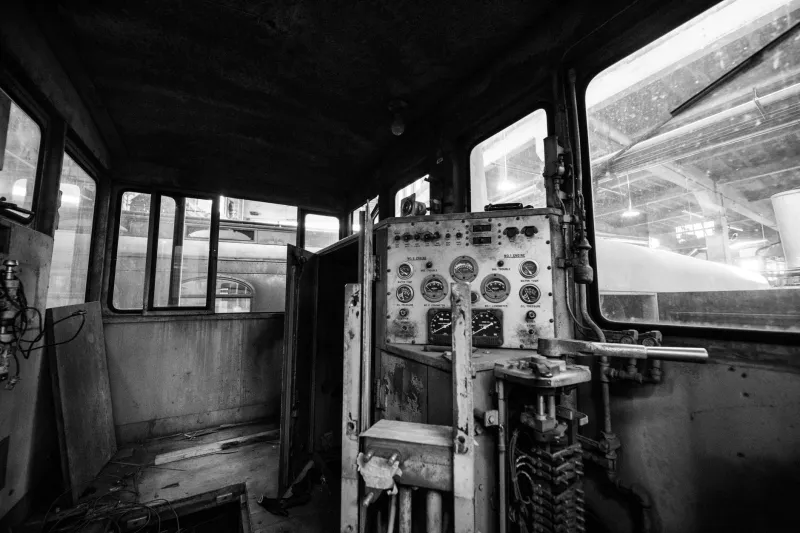
In a low-lit operations room somewhere in the American interior — the kind of place that smells faintly of burned coffee and old paperwork — a dispatcher named Gerald has been reading a wall of blinking indicators for the better part of three decades. He can tell, by the rhythm of the signals and the delay between updates, that something is wrong on a stretch of track sixty miles east before any automated alert has fired. He cannot fully explain how he knows. He just does.
That quality of knowing — accumulated across years of overnight shifts, near-misses, derailments averted, and winter storms navigated — is precisely what the American rail network is quietly, and perhaps irreversibly, beginning to lose.
The Infrastructure Beneath the Infrastructure
Most Americans understand railroads, if they think about them at all, as a logistical fact of life: freight moves, Amtrak runs, commuter trains arrive and depart. What they rarely consider is the human nervous system that coordinates all of it in real time. Railroad dispatchers are, in the plainest terms, air traffic controllers for the ground. They authorize train movements, manage track occupancy, sequence freight and passenger traffic across shared corridors, and respond to the endless cascade of mechanical, meteorological, and human variables that define any given operational day.
What makes this workforce remarkable — and what makes its erosion alarming — is the degree to which its effectiveness still depends on analog competency. Many dispatching centers across the United States continue to operate systems rooted in mid-twentieth-century design. Centralized Traffic Control boards, physical track diagrams, and radio communication protocols that predate the internet remain in active use across significant portions of the national network. These are not curiosities. They are load-bearing infrastructure.
And the people who understand them most deeply are retiring.
A Knowledge Gap With No Easy Patch
The Brotherhood of Locomotive Engineers and Trainmen, along with other rail labor organizations, has raised concerns for years about the pace at which experienced dispatchers are leaving the industry. The issue is not simply one of headcount. It is one of depth. A dispatcher with thirty years of experience on a particular territory — who knows which curves ice over first in January, which freight operators run heavy and slow, which signal quirks are harmless and which are harbingers — carries a form of situational intelligence that no onboarding program has yet found a way to transfer efficiently.
Railroad companies have invested substantially in digital dispatching platforms, computer-aided train control systems, and, more recently, Positive Train Control technology mandated by federal law following the 2008 Chatsworth collision in California that killed twenty-five people. These advances have genuinely improved safety. But technology advocates within the industry are careful to note that PTC and its successors are collision-avoidance systems, not dispatching replacements. The cognitive work of sequencing trains, managing exceptions, and making real-time judgment calls under pressure remains, for now, a human responsibility.
The danger, as several current and former dispatchers describe it, is a period of transition in which the old expertise has departed and the new systems have not yet matured enough to compensate. That window — already open — may be widening.
What Gets Lost When the Veterans Go
Consider what experienced dispatchers actually do during a major disruption. A freight derailment on a primary corridor does not simply stop one train. It propagates delays across potentially dozens of movements, affecting interchange agreements with connecting carriers, time-sensitive intermodal shipments, and passenger schedules that share the same trackage. A veteran dispatcher manages that cascade not by consulting a manual but by holding an internalized map of the network — its rhythms, its tolerances, its pressure points — and making dozens of sequential decisions in compressed time.
That internalized map is built slowly and cannot be downloaded. It requires exposure to real events, real failures, and real recoveries over years of practice. Training programs at major freight carriers like BNSF and Union Pacific have been refined and, in some cases, extended in recent years, but the industry-wide consensus among labor representatives is that classroom preparation and simulator time cannot fully substitute for territorial experience.
What experienced dispatchers also carry is institutional memory about the infrastructure itself — not just how to operate it, but why it was built the way it was, where its tolerances lie, and what its failure modes look like. That knowledge, once gone, must be reconstructed through incident and error.
The Political Economy of Modernization
It would be too simple to frame this as a story of technology versus tradition. The real tension is economic. Dispatching centers are expensive to staff, and the pressure on freight railroads to reduce operating ratios — the industry's preferred measure of cost efficiency — has made labor a persistent target. Consolidation of dispatching territories, which allows fewer operators to manage larger geographic areas, has been a consistent trend. The efficiency gains are real. So are the risks.
When a single dispatcher is responsible for a territory that once required two or three, the margin for error compresses. The cognitive load increases. And the institutional knowledge required to manage that expanded territory safely must be correspondingly deeper — at precisely the moment when the pool of deeply experienced operators is shrinking.
Federal Railroad Administration oversight has grown more rigorous in recent years, and the agency has issued guidance on fatigue management and staffing adequacy. But the regulatory framework has not yet developed a mechanism for measuring or preserving tacit knowledge — the kind that lives in Gerald's thirty-year read of a blinking signal board.
The Question No One Is Asking Loudly Enough
There is a broader public interest argument buried inside this operational story. The American freight rail network moves approximately forty percent of the nation's long-distance freight by volume. It is, in the most literal sense, a national artery. Its safe and efficient operation is not merely a matter of corporate profitability. It is a matter of supply chain resilience, environmental policy — rail is dramatically more fuel-efficient than trucking — and the physical safety of the communities through which these trains pass.
When that network experiences disruptions — and it does, with some regularity — the consequences are felt by farmers, manufacturers, retailers, and consumers in ways that rarely get traced back to their operational origins. The derailment in East Palestine, Ohio in February 2023 forced a national reckoning with rail safety that was long overdue. But the conversation that followed focused primarily on equipment standards and hazardous materials protocols. The quieter question of who is directing these trains, how they were trained, and what happens when they are gone received comparatively little attention.
That question deserves a louder hearing. The dispatchers who answer it every day — in low-lit rooms, reading walls of signals that most Americans will never see — are carrying more of this country's weight than the country has yet acknowledged. The time to document what they know, and to build serious succession infrastructure around it, is not after the next major disruption. It is now.
Blink Media covers labor, infrastructure, and institutional knowledge as part of its ongoing commitment to the stories that sustain American life.