When the Funeral Director Is the Last One Who Remembers
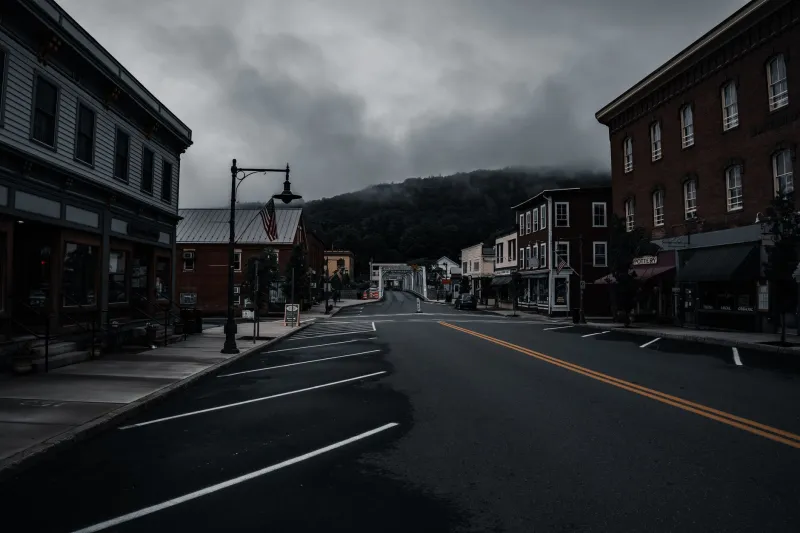
In Harlan County, Kentucky, there is a man named Douglas Combs who has been preparing bodies for burial for thirty-one years. He has eulogized miners, schoolteachers, veterans of three wars, and the last remaining speaker of a regional dialect that linguists had been quietly documenting for decades. He kept notes on all of them—not because anyone asked him to, but because it seemed, in his words, like the only decent thing left to do.
"Nobody else was writing it down," Combs said, sitting in the small office attached to the funeral home his father opened in 1971. "The paper closed. The county historical society lost its funding. The church that used to keep records burned down in 2009. So I started keeping records."
Across rural America, a quiet and largely unexamined phenomenon has taken hold. As the institutional scaffolding of small-town civic life—local newspapers, public libraries with robust staff, historical societies, even churches—has eroded under the combined pressures of economic decline, demographic shift, and digital disruption, funeral home directors have emerged as unexpected custodians of community memory. They are not trained archivists. They receive no public funding for this work. And yet, in hundreds of communities from Appalachia to the Great Plains, they are often the last people who know the full, unfiltered truth of who lived in a place, what that place meant, and what has been surrendered to time.
The Obituary as Historical Document
The American obituary has never been taken entirely seriously as a form of journalism. It occupies an awkward space between public record and paid announcement, between grief and commerce. But in communities where investigative reporting has collapsed, the obituary has quietly assumed a weight it was never designed to carry.
Funeral directors in small towns routinely interview surviving family members for hours at a time—not merely to compile the biographical bullet points of a standard death notice, but because families, in their grief, share everything. They talk about the factory that closed and took the father's livelihood with it. They describe the addiction that followed. They name the landlord who let the house fall apart. They recount the medical debt that consumed the final years. They reveal, without always intending to, the structural failures that shaped an entire life.
"By the time I've finished talking to a family, I know more about what really happened in that person's life than any reporter ever would," said Sandra Pruett, who operates a funeral home in a small Mississippi Delta town where the weekly newspaper printed its last edition in 2018. "And I know more about this community—about what's actually going on here—than any politician who flies in for a campaign stop."
Pruett has begun digitizing the records her funeral home has accumulated since 1988. She is doing this on her own time, using her own equipment, because she understands that what she holds is not simply a business archive. It is, she believes, a social history.
The Weight of Knowing
There is a psychological dimension to this accidental archival role that deserves serious attention. Funeral directors already carry a burden that most professions do not require: sustained, intimate proximity to death, grief, and the rawest expressions of human loss. Adding the weight of institutional memory—becoming the person a community turns to not only in bereavement but as a living reference point for its own history—compounds that burden considerably.
Robert Whitfield has operated a funeral home in a small Nebraska town for twenty-two years. He can tell you which farms went under during the 2012 drought and which families never recovered. He can trace the opioid crisis in his county through the deaths he handled beginning around 2015. He watched the meatpacking plant on the edge of town bring a wave of immigrant workers, and then watched those workers die without adequate life insurance, without local family, sometimes without anyone to claim them.
"I became the county's unofficial coroner of economic history," he said, with a dry humor that barely conceals the gravity of what he is describing. "Every time something bad happened to this community, it eventually came through my door."
Whitfield has never been interviewed by a journalist before this conversation. He has never been consulted by a university researcher or a policy analyst. The knowledge he holds—granular, longitudinal, deeply human—exists nowhere in any database or academic study. It lives entirely in his memory and in the paper files stacked in the back room of a building that, he acknowledges, will likely close when he retires.
What Disappears When the Last One Closes
The closure of rural funeral homes is not a new story, but it is an accelerating one. Corporate consolidation has transformed the American death-care industry over the past three decades, with large chains acquiring independent operations in markets they deem profitable and simply allowing others to go dark. According to industry analysts, hundreds of independent rural funeral homes have closed since 2010, with the pace of closures increasing as the owners who built them age out of the profession without successors.
The logistical consequences of these closures—longer transport distances for families, reduced service options, higher costs—have been documented. The cultural and archival consequences have not.
When Douglas Combs eventually closes the doors of his Harlan County funeral home—a prospect he discusses with the resigned clarity of a man who has made peace with difficult truths—the notes he has kept for three decades will almost certainly disperse or disappear. There is no institution positioned to receive them. There is no county historical organization with the resources or staff to process them. There is no local newspaper to have ever thought to ask for them.
"I've thought about contacting a university," Combs said. "But which one? And what would I even say? I've got boxes of notes about people nobody outside this county ever heard of. Why would anyone want that?"
The answer, of course, is that those boxes represent exactly the kind of granular, place-specific, human-scaled historical record that no algorithm can reconstruct and no centralized database can replicate. They are the raw material of social history—the kind that reveals not how a community appeared from the outside, but how it actually functioned, fractured, and endured from within.
The Obligation to Look
The role these individuals have assumed is not one they sought. It emerged from proximity, from the particular intimacy of their profession, and from the vacuum left by the collapse of the institutions that were supposed to perform this function. They are not heroes in any conventional sense. They are simply people who were present, who paid attention, and who understood—sometimes without being able to articulate it—that memory is a form of justice.
In communities where power has never been adequately scrutinized, where the stories of working people have rarely been considered worthy of formal documentation, the funeral director who keeps notes is performing an act of civic resistance. It is quiet, unrecognized, and almost entirely without institutional support. It is also, in many places, the last act of its kind still being performed.
What America owes these individuals is not sentimentality. It is attention. It is the serious engagement of journalists, archivists, historians, and policymakers with the question of what is being lost—and what might still be saved—before the last keeper of these records closes the door for the final time.