Brick by Brick: The Citizen Historians Refusing to Let Corporate America Bury Small-Town Stories
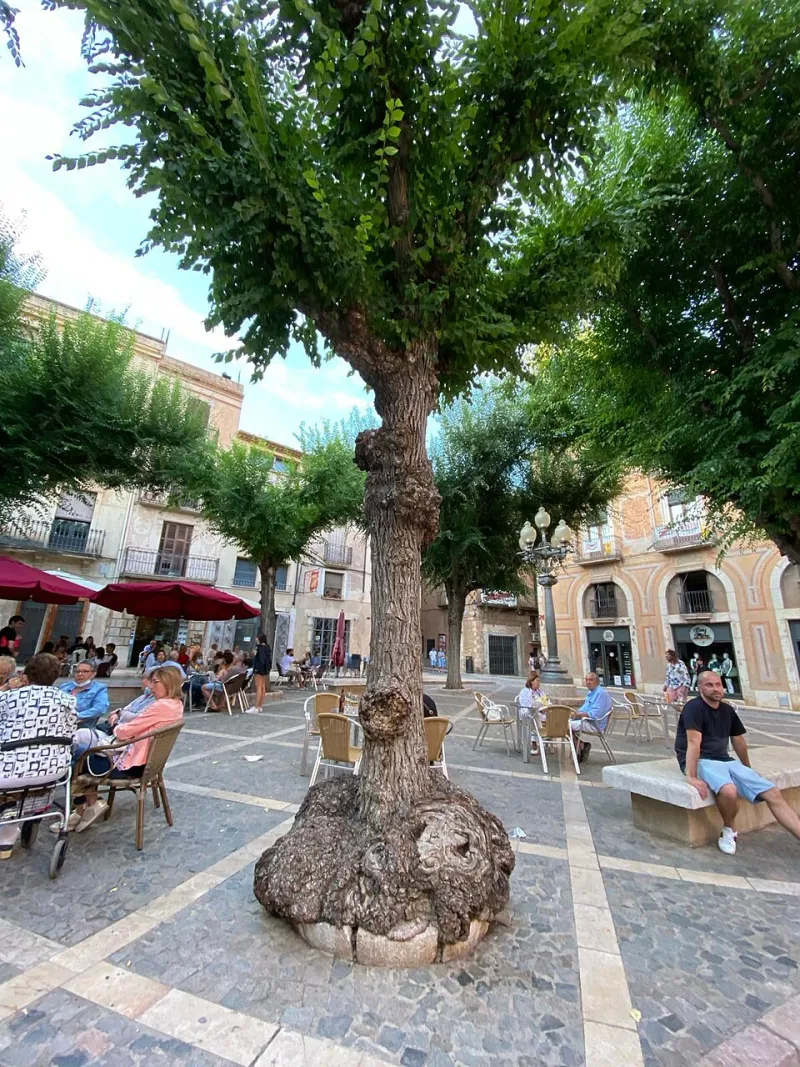
Photo: Galimatiasgg, CC0, via Wikimedia Commons
In Harlan County, Kentucky, a retired schoolteacher named Dorothy Combs spends her Tuesday mornings photographing storefronts. Not the new ones—the Dollar General that replaced the hardware store her father ran for thirty-one years, or the national pharmacy chain that absorbed the locally owned apothecary where three generations of her neighbors once filled prescriptions and shared gossip in equal measure. Dorothy photographs what remains: a faded mural on a cinder-block wall, a hand-lettered sign still clinging to a shuttered diner window, the architectural bones of a community that once understood itself through its own institutions.
"When those buildings go, the stories go with them," she says. "Nobody from a corporate office is going to write that history down."
Dorothy is not alone. Across the country, in depopulating mill towns, in agricultural communities swallowed by agribusiness, in once-vibrant main streets now anchored by out-of-state chains, ordinary citizens are undertaking an extraordinary act of cultural resistance. They are becoming the memory keepers of American places that the market has decided are expendable.
The Architecture of Forgetting
The forces reshaping small-town America are well-documented in economic terms. Private equity acquisitions of local businesses, the proliferation of formula retail, the collapse of regional newspapers, and speculative real estate investment have all contributed to a kind of commercial monoculture that strips communities of their distinctiveness. What is less frequently examined is the cultural cost—the erasure of accumulated local knowledge, vernacular identity, and the intergenerational stories that give places meaning beyond their property values.
Researchers at the University of Illinois have noted that the United States loses an estimated twenty-five locally owned businesses per day to chain competition or closure, each one representing not merely an economic transaction but a repository of community memory. The barber who knew every family's history. The diner owner who extended credit during hard winters. The hardware store that stocked parts nobody else carried because that's what the local farmers needed.
When these institutions vanish, so does the institutional knowledge they carried—unless someone intervenes.
Oral Histories as Acts of Preservation
In Clovis, New Mexico, a coalition of community volunteers has spent the past four years conducting recorded oral history interviews with longtime residents, many of them elderly, whose recollections predate the strip-mall development that now defines the town's commercial corridor. The project, organized under the informal banner of the High Plains Memory Project, has collected more than three hundred hours of testimony covering everything from Depression-era agricultural practices to the social geography of neighborhoods that no longer exist in their original form.
"We're not academics," says Marcus Treviño, one of the project's founding volunteers and a former city bus driver. "We're just people who grew up here and realized that if we didn't start asking questions, there would be nobody left to answer them."
The recordings are indexed, transcribed, and stored on a server maintained by the local library—itself a resource under perennial budget threat. Treviño acknowledges the precariousness of the entire enterprise. Funding is sporadic, volunteers burn out, and the community members whose stories most need capturing are aging rapidly. "Every year we wait, we lose someone," he says.
This urgency is a defining characteristic of grassroots archival work. Unlike institutional preservation efforts backed by university endowments or federal grants, citizen-led projects operate with the constant awareness that their window is closing.
Photography as Counter-Narrative
In rural Vermont, a former commercial photographer named Elaine Bouchard has spent six years building a visual archive she calls The Familiar Strange—a collection of more than eight thousand images documenting the physical transformation of small communities throughout the Northeast Kingdom region. Her photographs are deliberately unheroic: empty parking lots where family farms once stood, corporate signage incongruously perched above nineteenth-century brick facades, the interiors of chain restaurants occupying buildings that once served entirely different social functions.
Bouchard frames her work explicitly as counter-narrative. "The corporations have marketing departments. They have brand managers. They control how their presence in a community gets represented," she explains. "The community itself rarely gets to tell its own story about what was lost and what replaced it."
Her archive has been exhibited at regional libraries and community centers, and a selection of the images was recently acquired by the Vermont Historical Society. But Bouchard is candid about the limitations of her reach. "I'm one person with a camera and a hard drive. The forces I'm documenting have budgets I can't imagine."
Digital Archives and the Question of Permanence
The emergence of accessible digital tools has lowered the barrier to community archiving significantly, enabling projects that would have required institutional infrastructure a generation ago. Platforms like the Internet Archive and state-level digital library consortia have made it possible for small groups to host and share historical materials at minimal cost. Several grassroots projects have developed searchable online databases of local photographs, documents, and audio recordings that are freely accessible to researchers and community members alike.
Yet the digital turn introduces its own vulnerabilities. File formats become obsolete. Hosting services shut down. Domain registrations lapse. The Internet Archive itself has faced legal challenges that threaten its long-term viability. Archivists working at the community level are acutely aware that digital preservation is not the same as permanent preservation—it is merely a different category of fragility.
"We've digitized a lot of things," acknowledges Ruth Ann Kowalski, who coordinates a community archive in a former steel town in western Pennsylvania. "But digitizing something doesn't mean it's safe. It means it's in a different kind of danger."
Kowalski's project has partnered with a regional university to back up its holdings on institutional servers, an arrangement she describes as essential but imperfect. The university's priorities can shift. Funding structures change. The relationship requires constant maintenance.
Why This Work Matters Beyond Nostalgia
It would be easy to characterize citizen archival work as a form of sentimental nostalgia—an impulse to freeze communities in amber rather than reckon honestly with the economic and demographic changes reshaping American life. The people doing this work reject that framing strenuously.
"This isn't about pretending the past was perfect," says Marcus Treviño. "A lot of what we're documenting includes hard things—segregation, poverty, labor exploitation. But those stories belong to us. They're ours to tell and ours to learn from. When the history disappears, so does the accountability."
There is a civic dimension to this argument that deserves serious attention. Communities that lose their historical self-understanding also lose their capacity to evaluate what is being done to them in the present. When a corporation or a real estate developer arrives with promises of revitalization, a community with a robust sense of its own history is better equipped to ask critical questions: Who benefited from development in the past? Whose interests were served? What was actually lost?
The citizen historians of small-town America are not merely preserving the past. They are building the evidentiary foundation for future accountability—one oral history, one photograph, one digitized document at a time.
In Harlan County, Dorothy Combs continues her Tuesday rounds. Her archive now numbers more than four thousand images, stored on external drives and backed up at a cousin's house in Lexington. She has no institutional affiliation, no grant funding, and no guarantee that her work will outlast her. What she has is the conviction that someone must bear witness—and that in the absence of institutions willing to do so, ordinary people must take up the task themselves.
"History doesn't preserve itself," she says, adjusting her camera strap. "You have to want it to survive."