Holding the Past Together With Volunteer Hours and Fraying Budgets
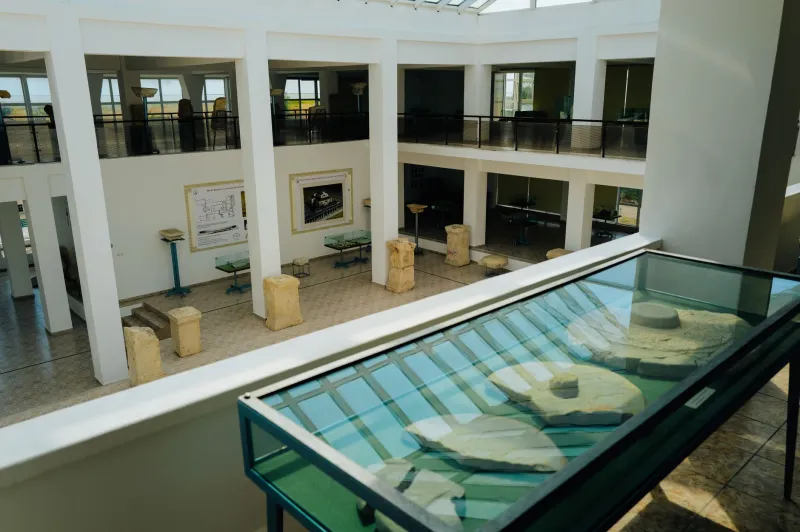
On a Tuesday morning in early March, Diane Kowalczyk unlocks the front door of the Harwick County Historical Society with a key so worn it barely catches the tumbler. She is seventy-one years old, a retired schoolteacher, and the closest thing this institution has to a full-time director. Her annual stipend amounts to less than a part-time barista earns in a month. The heating system groans. A handwritten sign near the Civil War display case reads: Please do not touch. Glass is cracked.
This is not a story of neglect born from indifference. Kowalczyk cares deeply—obsessively, her family would say. So do the dozen or so volunteers who rotate through on weekends, cataloging donated ledgers and repairing exhibit labels with laminating pouches ordered in bulk from a discount office supply website. What is missing is not devotion. What is missing is money, infrastructure, and the sustained attention of institutions large enough to provide either.
The Invisible Infrastructure of American Memory
The United States is home to an estimated 35,000 museums, according to the American Alliance of Museums. The majority of them are not the Smithsonian or the Metropolitan. They are county historical societies operating out of repurposed Victorian homes. They are single-room repositories of agricultural equipment housed in former grain silos. They are collections of local newspaper archives, immigrant family photographs, and decommissioned factory machinery that no one else thought to preserve.
These institutions form an informal, largely invisible infrastructure of American cultural memory. They document not the grand national narrative but the granular one—the specific texture of life in a particular place, among a particular people, during a particular era. When they disappear, that texture disappears with them. Unlike a closed factory or a demolished building, the loss is rarely marked.
And they are disappearing. A 2022 report from the Institute of Museum and Library Services found that operating budgets for small and rural museums had declined in real terms over the previous decade, even before accounting for the disruptions caused by the COVID-19 pandemic, which shuttered many of these institutions for months and, in some cases, permanently.
Innovation in the Absence of Resources
What is striking, when you spend time with the people running these places, is not their despair but their ingenuity. Necessity, it turns out, is a remarkably effective curator.
In Caldwell Parish, Louisiana, a small museum dedicated to the region's timber industry has partnered with a local high school to digitize its photographic archive. Students earn service-learning credit; the museum gains a searchable database it could never have funded independently. The project has drawn visitors from as far as Oregon—descendants of lumber families who had no idea records of their ancestors' labor still existed.
In central Ohio, a museum focused on the region's Depression-era glassware manufacturing has turned to social media with unexpected results. Its Instagram account, managed by a twenty-six-year-old volunteer whose grandmother worked in the factories, has accumulated tens of thousands of followers—people who collect vintage glassware, historians, and simply curious users drawn in by the visual richness of the objects. Online donations have more than doubled in two years.
These are genuine success stories, but they are also cautionary ones. They depend on the right volunteer appearing at the right moment, on a fortuitous partnership, on algorithmic luck. They are not systems. They are improvisations.
The Generational Cliff
Perhaps the most pressing structural threat facing small-town museums is demographic. The volunteers who sustain them are, on average, aging rapidly. Many of the people most invested in preserving local history lived through it—or were raised by those who did. As that generation recedes, the emotional and biographical connection to the material weakens.
Kowalczyk is candid about this. "When I started here twenty years ago, we had thirty-five active volunteers," she says, straightening a framed photograph of the county's 1947 Fourth of July parade. "Now we have eleven. Most of them are older than I am."
Recruiting younger volunteers is not simply a matter of outreach. It requires making the case that local history is relevant—that understanding where a community came from has bearing on where it is going. That argument is harder to make in an information environment saturated with content and optimized for immediacy. The slow work of preservation does not translate easily into the metrics that define value in the digital age.
Some museums have found traction by explicitly connecting historical material to contemporary social questions. An institution in western Pennsylvania recently mounted an exhibit linking the region's labor union history to current debates over workers' rights, drawing audiences that would not typically visit a historical society. The approach is not without controversy—some donors and board members resist what they perceive as politicization—but it reflects a broader recognition that relevance must be actively constructed, not assumed.
What Systemic Support Could Look Like
Advocates for small museum preservation have spent years articulating what a serious policy response might involve. The proposals are neither radical nor particularly expensive relative to the cultural value at stake.
Expanded federal grant programs through agencies like the National Endowment for the Humanities could provide baseline operating support rather than limiting funding to specific projects—a distinction that matters enormously to institutions whose most urgent need is keeping the lights on and the roof sealed. State humanities councils, many of which already serve as critical intermediaries for smaller institutions, could be meaningfully recapitalized. University museum studies programs could formalize apprenticeship pipelines that place trained professionals in rural and small-town institutions, even temporarily.
None of this is happening at meaningful scale. Funding for the NEH has remained essentially flat in inflation-adjusted terms for years, and proposals to cut it further have surfaced repeatedly in congressional budget debates. The political will to treat local cultural preservation as a public good—rather than a private enthusiasm—has not materialized.
The Stakes of Looking Away
There is a tendency to frame the decline of small-town museums as a sentimental concern—the province of nostalgia, of people reluctant to let go of a past that is simply receding naturally. That framing misunderstands what is actually being lost.
Local museums are repositories of primary source material. They hold records that document labor practices, environmental conditions, migration patterns, and community life in ways that national archives do not and cannot. When a collection is dispersed or destroyed, that documentation is gone. The historical record becomes thinner. Future researchers, future communities, future citizens trying to understand how they came to be where they are will find less to work with.
Diane Kowalczyk knows this. On the way out, she pauses by a display of hand tools donated by a family whose great-grandfather operated the county's last independent blacksmith shop, which closed in 1961. "Nobody remembers that this place had a blacksmith," she says. "They will if we stay open."
The question is whether staying open—on goodwill, on duct tape, on the uncompensated labor of people who simply refuse to let go—is a sustainable strategy for preserving what America has been. The evidence suggests it is not. What replaces it, if anything, remains unanswered.